




Body & weight
Pins and Needles? Why Tingling Can Happen During Perimenopause
Pins and Needles? Why Tingling Can Happen During Perimenopause
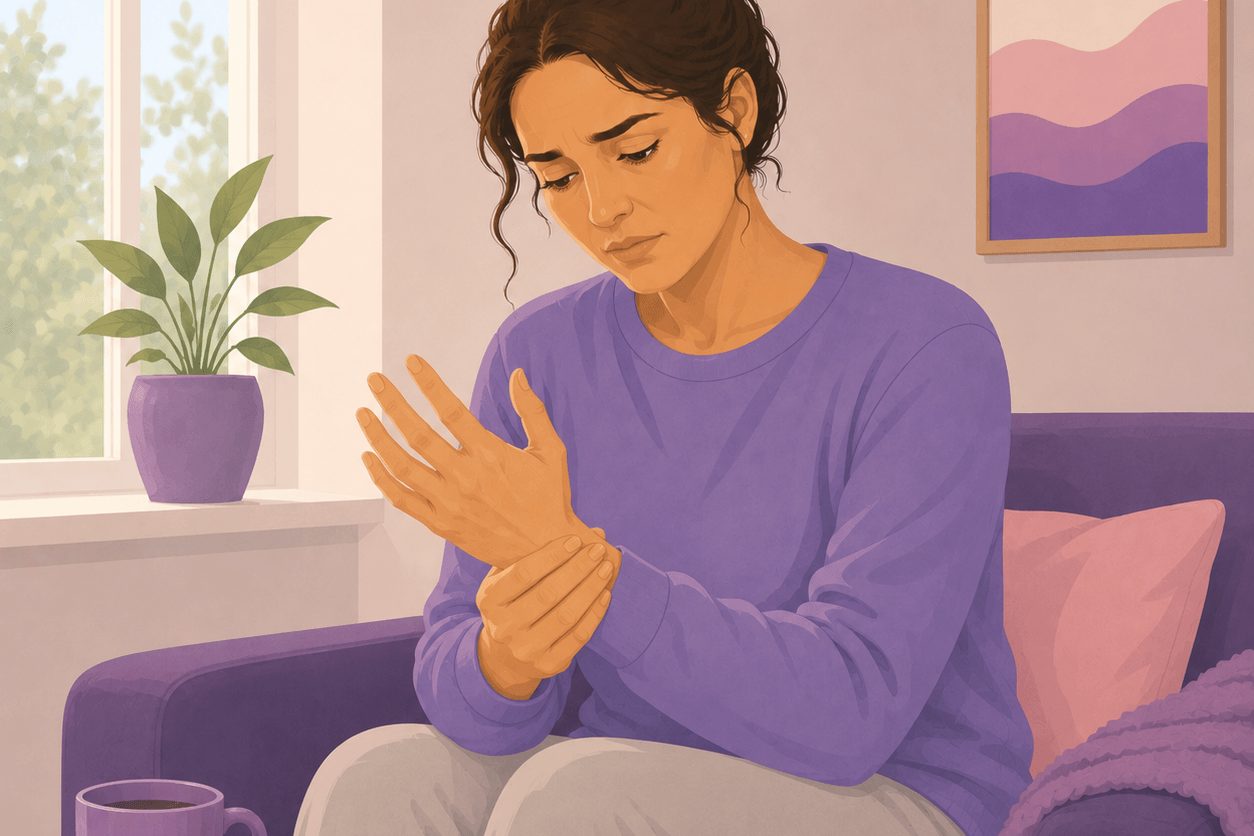
That prickly, numb, or tingling feeling in your hands, feet, arms, or legs — often described as “pins and needles” — is called paresthesia.
It can feel weird or even unsettling, especially when it shows up out of nowhere. But in perimenopause, it’s surprisingly common. Hormonal changes can affect how your nerves function, especially when estrogen levels rise and fall more dramatically than they used to.
Note: If tingling is severe, ongoing, or accompanied by weakness, it’s important to talk to your doctor to rule out other causes.
What’s Happening in Your Body?
Estrogen helps regulate both your central and peripheral nervous systems. When levels fluctuate, nerve signals may become disrupted — like static on a radio. Blood flow may slow down, and your nerves might not get the nutrients or support they need. All of this can add up to misfiring signals… and those strange tingling sensations.
What You Can Do to Ease Tingling:
Move More Often: Sitting too long can compress nerves and slow circulation.
Try This: If you sit at a desk, set a timer to stand, stretch, or walk around for a few minutes every hour.
Boost Your B Vitamins: B6 and B12 are especially important for nerve health.
Try This: Add foods like salmon, leafy greens, eggs, or fortified cereals to your meals.
Fix Your “Tech Neck” Posture: Looking down at your phone can compress nerves in your neck and shoulders, leading to tingling in your hands.
Try This: Keep your screen at eye level. When sitting, imagine a string gently pulling the top of your head up toward the ceiling to elongate your spine.
The 'Alphabet' Ankle Roll for Better Circulation
If you feel tingling in your feet, it might be due to reduced circulation. This simple, gentle movement encourages blood flow and nerve activation — all without needing to stand up.
Try it while sitting:
- Sit comfortably and lift one foot off the ground.
- With your big toe, “draw” the letter A in the air.
- Then the letter B. Keep going through the alphabet to Z.
- Switch feet and repeat on the other side.
- You may hear clicks or pops as your ankle moves through its full range. This movement activates the foot and ankle muscles, encourages blood flow, and can help ease tingling, numbness, or cold toes.
How Estrogen Supports Your Peripheral Nervous System
When we think of nerves, we often picture the brain and spine. But your peripheral nervous system is equally important — it sends signals from your brain to your hands, feet, and everywhere in between.
Estrogen plays a key role in keeping this system healthy:
-
It Supports Blood Flow (Vasodilation): Estrogen helps keep blood vessels open, so your nerves get plenty of oxygen and nutrients. When estrogen drops, that flow can slow, making nerves more vulnerable to disruption.
-
It Protects Your Nerve Insulation: Just like central neurons, peripheral nerves need myelin, a protective layer that keeps signals clean and fast. Estrogen helps maintain this insulation.
-
It Calms Inflammation: Estrogen has an anti-inflammatory effect. When it declines, nerves may become more easily irritated, leading to strange sensations.
When estrogen becomes unstable, all of these protective effects weaken. That’s when the signal gets fuzzy — and you feel it as tingling, numbness, or that familiar “pins and needles” sensation.
It’s not just in your head. Your body is adjusting to a new hormonal rhythm — and your nerves are learning how to keep up.