




Hair, Skin & Nail
The Second Puberty: A Guide to Perimenopausal Acne
Just when you thought you’d left breakouts behind in your teenage years, they’re back, this time with a hormonal twist. If you’re suddenly dealing with deep, painful pimples (especially along your jawline, chin, and neck), you’re not alone. This is a direct result of the hormonal shifts of perimenopause, often called a “second puberty” for a reason.
What’s Happening in Your Body?
It’s all about the shifting ratio of estrogen to androgens (like testosterone). As estrogen levels decline, testosterone has more influence. This relative androgen dominance tells your sebaceous glands to produce more and thicker sebum (oil). That sticky oil can easily clog pores, creating the perfect environment for bacteria to thrive and inflamed cysts to form.
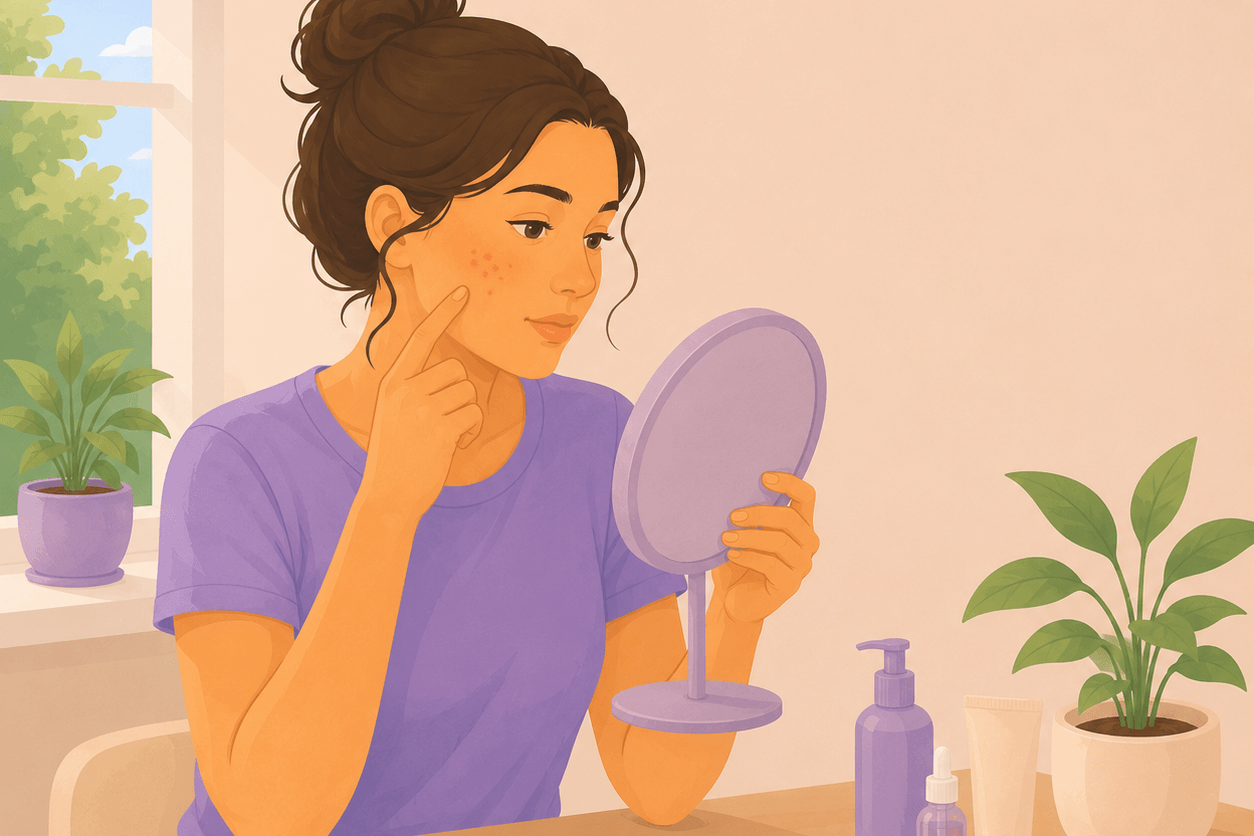
Actionable Tips to Manage Hormonal Acne:
Simplify Your Skincare: Harsh, stripping acne treatments designed for teenage skin will only irritate your now-drier, more sensitive perimenopausal skin, making things worse.
Try This: Switch to a gentle, non-foaming cleanser. Use a targeted treatment with salicylic acid or a low-percentage benzoyl peroxide just on the spots themselves, not all over your face. Most importantly, use a non-comedogenic moisturizer to keep your skin barrier healthy.
Reduce Your Dairy and Sugar Intake: For many women, high-glycemic foods and dairy are major triggers for hormonal acne.
Try This: For one month, try eliminating or significantly reducing dairy products and sugary, processed foods and see how your skin responds.
Don’t Pick: It’s so tempting, but picking at these deep, cystic pimples will only drive the inflammation deeper, increase the risk of scarring, and prolong healing time.
Androgen Dominance and Sebum: The Science of a Pimple
Why does this stage of life bring on breakouts that feel more like deep cysts than teenage zits? The answer lies in how your oil glands respond to shifting hormones.
As estrogen declines, the skin’s oil production doesn’t just continue, it thickens and increases, especially if androgens (like testosterone and DHEA) are relatively high. This creates what dermatologists call a comedogenic environment, one where:
Sebum becomes thicker, making it more likely to clog pores.
Skin cells don’t shed efficiently, leading to blocked follicles.
Inflammation rises, driven by hormone-fueled immune responses.
These clogged, inflamed pores become breeding grounds for acne-causing bacteria (like C. acnes), which feed on the oil and trigger immune responses, resulting in painful cysts.
This is why hormonal acne can feel “deeper,” more persistent, and slower to heal than other types. Managing androgens and supporting the skin barrier are key to calming the inflammation from the inside out.

This article is intended to inform and empower, not to replace personalized medical advice. If you have any concerns about your health, please speak with your doctor or a qualified healthcare provider.
Other Hair, skin & nails articles
Skin sensitivity & flares
0 Comments4 Minutes
Brittle Nails
0 Comments4 Minutes
Thinning hair & Dry skin
0 Comments4 Minutes