




Hair, Skin & Nail
When Your Skin Gets Angry: Managing Inflammatory Skin Conditions
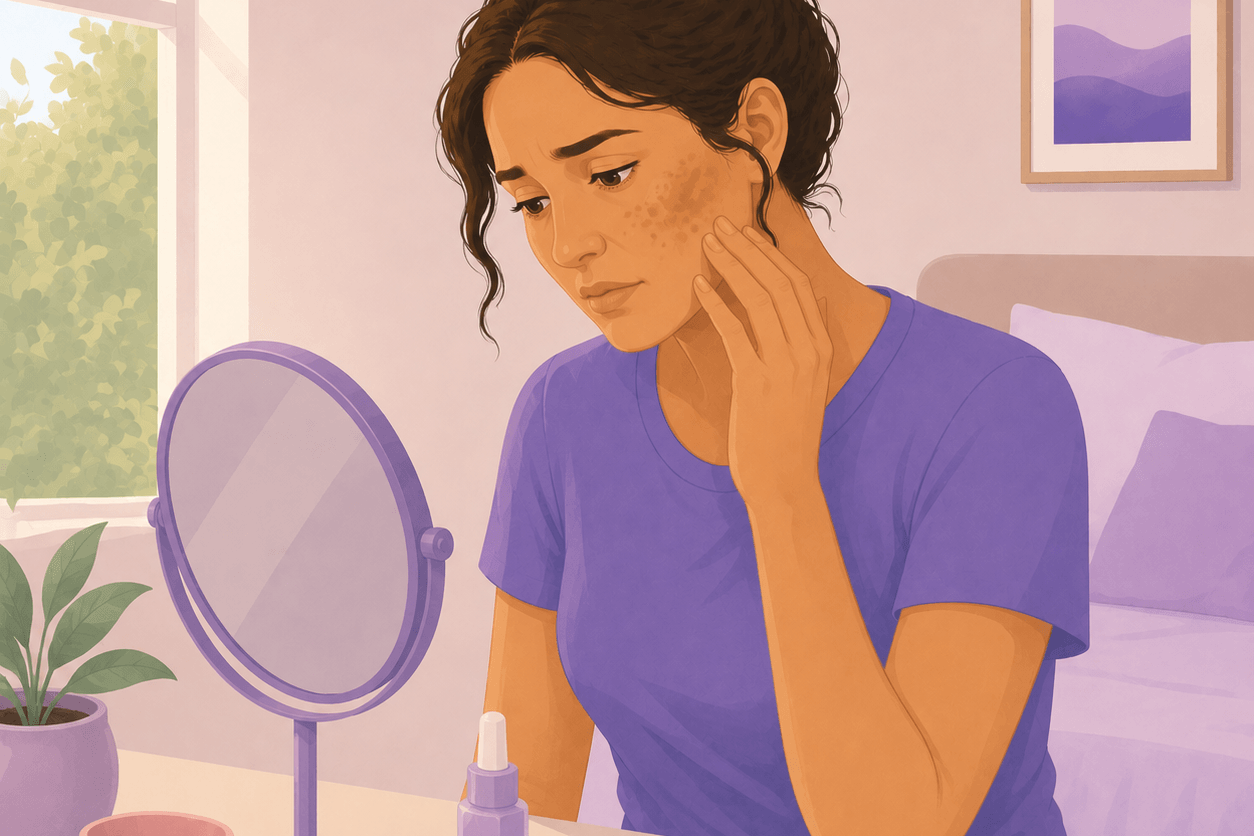
If you’ve dealt with a chronic skin condition like eczema, psoriasis, or rosacea, you might notice it’s flaring more often, or more intensely, during perimenopause. Or you might be experiencing one of these for the first time. Either way, you’re not imagining it. The link between your skin and your hormones runs deep.
What’s Happening in Your Body? Estrogen helps maintain a strong skin barrier and has natural anti-inflammatory properties.
When estrogen drops during perimenopause, your skin becomes more vulnerable — more “leaky,” more reactive, and more prone to dryness, allergens, and environmental triggers. At the same time, your body may become more inflammatory overall, creating the perfect storm for flare-ups.
Actionable Tips to Calm Your Skin:
Heal Your Skin Barrier: This is job number one. A damaged barrier cannot heal.
Try This: Strip your routine back to the basics: a gentle, creamy, non-foaming cleanser, a simple, deeply hydrating moisturizer with ingredients like ceramides, hyaluronic acid, and glycerin, and a mineral sunscreen. Avoid harsh scrubs, acids, and fragrances during a flare.
Adopt an Anti-Inflammatory Diet: Your skin reflects your internal inflammatory state.
Try This: Focus on eating anti-inflammatory foods like fatty fish (salmon, mackerel), leafy greens, berries, and turmeric. Reduce or eliminate common inflammatory triggers like sugar, alcohol, and highly processed foods.
Manage Your Stress: Stress is a major trigger for all inflammatory conditions. When you are stressed, your body releases cortisol, which can further damage the skin barrier and fuel inflammation.
Try This: Find a daily stress-reduction practice that works for you. Meditation, gentle yoga, deep breathing, or walking in nature can all help to calm your nervous system and, in turn, your skin.
The 'Oatmeal Bath' for Soothing Itchy, Inflamed Skin
For centuries, oatmeal has been used to soothe angry, itchy, inflamed skin, whether from eczema, psoriasis, or a simple rash. It’s a cheap, natural, and incredibly effective remedy.
Why it Works: Oats contain compounds called avenanthramides, which have powerful anti-inflammatory and anti-histamine effects. When ground finely and added to warm water, they create a gel-like barrier on the skin, helping trap moisture and reduce irritation.
How to do it:
- Grind plain, uncooked oats in a blender until they turn into a fine, silky powder.
- Stir a generous scoop into a tub of lukewarm (not hot) water until the water looks milky.
- Soak for 15–20 minutes.
- Pat your skin dry (don’t rub), and immediately apply a thick moisturizer while your skin is still slightly damp.
The Skin Barrier, TEWL, and Inflammation: The Science of a Flare-Up
Your outermost skin layer — called the stratum corneum — is often compared to a brick-and-mortar wall. The “bricks” are your skin cells, and the “mortar” is a layer of ceramides and lipids that keeps things tightly sealed in.
When estrogen declines, this mortar starts to crumble.
This leads to two problems:
Increased TEWL (Transepidermal Water Loss): Water easily evaporates out through the leaky barrier, leaving the skin chronically dry, tight, and dehydrated.
Increased Permeability: Irritants and allergens can now easily penetrate the weakened wall and get into the deeper layers of the skin.
When that immune system kicks in, your skin flares. That’s when you see redness, stinging, flaking, or bumps appear, sometimes in areas that were previously calm. It’s not just about sensitive skin. It’s about a compromised skin barrier and heightened inflammation.
This article is intended to inform and empower, not to replace personalized medical advice. If you have any concerns about your health, please speak with your doctor or a qualified healthcare provider.