




Digestive health
The Perimenopausal Burn: Your Guide to Acid Reflux & Heartburn
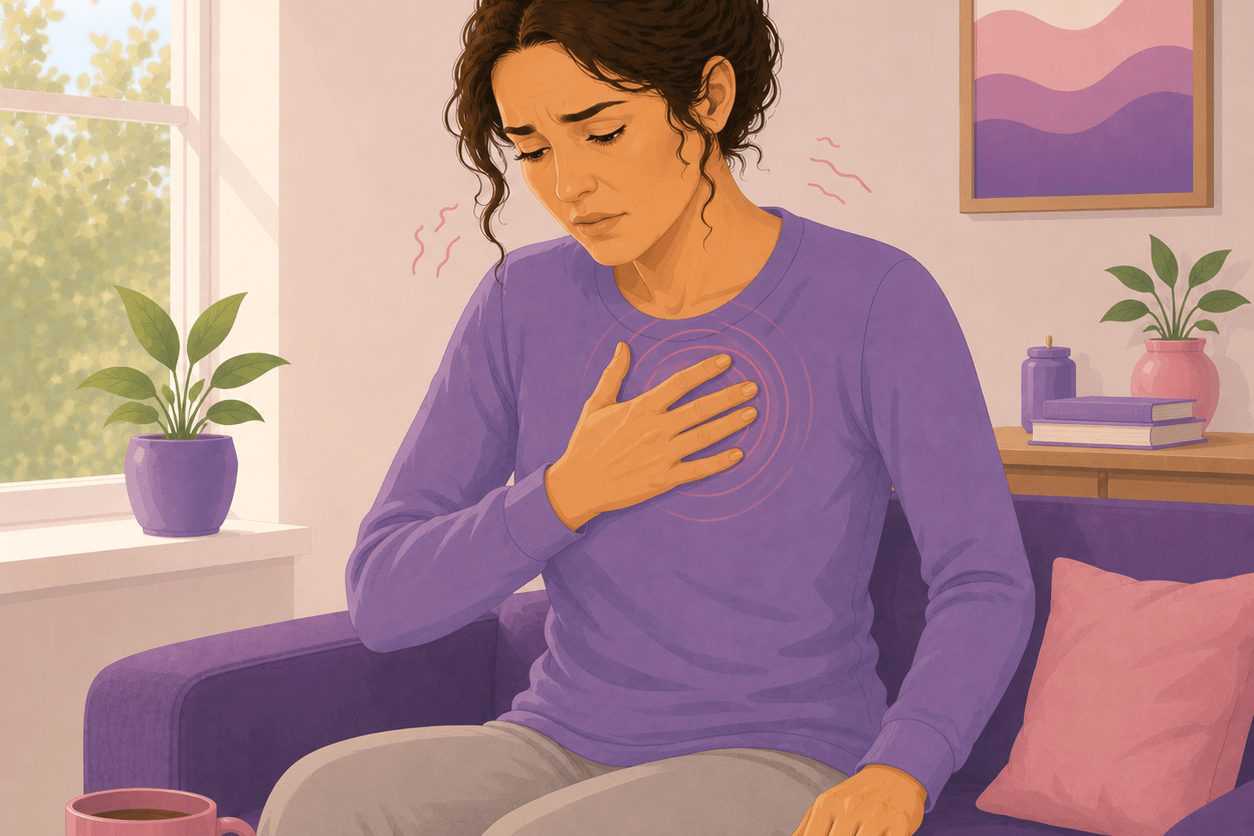
That burning sensation in your chest after eating. The sour taste in your mouth. The uncomfortable feeling of food creeping back up. If you’ve never had heartburn before and are now suddenly reaching for antacids, shifting hormones may be the reason why.
What’s Happening in Your Body?
At the base of your esophagus is a muscular ring called the lower esophageal sphincter (LES). Its job is to open and close at the right moments, letting food pass into your stomach and keeping it from splashing back up. Estrogen and progesterone help maintain the tone of this muscle.
As these hormones decline, the LES may weaken or relax too much. This can allow stomach acid to move the wrong way, rising into your esophagus and causing that familiar burn.
Actionable Tips to Quench the Fire:
Need fast relief after a meal? Grab a piece of sugar-free gum.
Why it Works: Chewing stimulates saliva, which helps neutralize stomach acid and encourages you to swallow more often. This extra swallowing helps move acid back into the stomach where it belongs.
How to do it:
- Choose a sugar-free gum that isn’t peppermint or spearmint flavored, since those can sometimes relax the LES.
- Try a fruit or classic bubblegum flavor.
- Pop in a piece and chew for about 30 minutes after a meal.
The Lower Esophageal Sphincter (LES): The Science of a Leaky Valve
The LES acts like a gate between your esophagus and stomach. It’s designed to open briefly when you swallow and then close to keep acid where it belongs.
This muscle responds to signals from hormones, nerves, and the brain. When estrogen and progesterone are in balance, the LES stays toned and reactive. But during perimenopause, those signals may become scrambled. Estrogen can drop sharply or fluctuate, while progesterone tends to have a relaxing effect on smooth muscle tissue. Together, these shifts can cause the LES to loosen when it shouldn’t.
When that happens, stomach acid can rise up into the esophagus — a delicate area without much protection. That’s when the burning starts.