




Body & weight
That Creepy-Crawly Feeling: Your Guide to Restless Legs
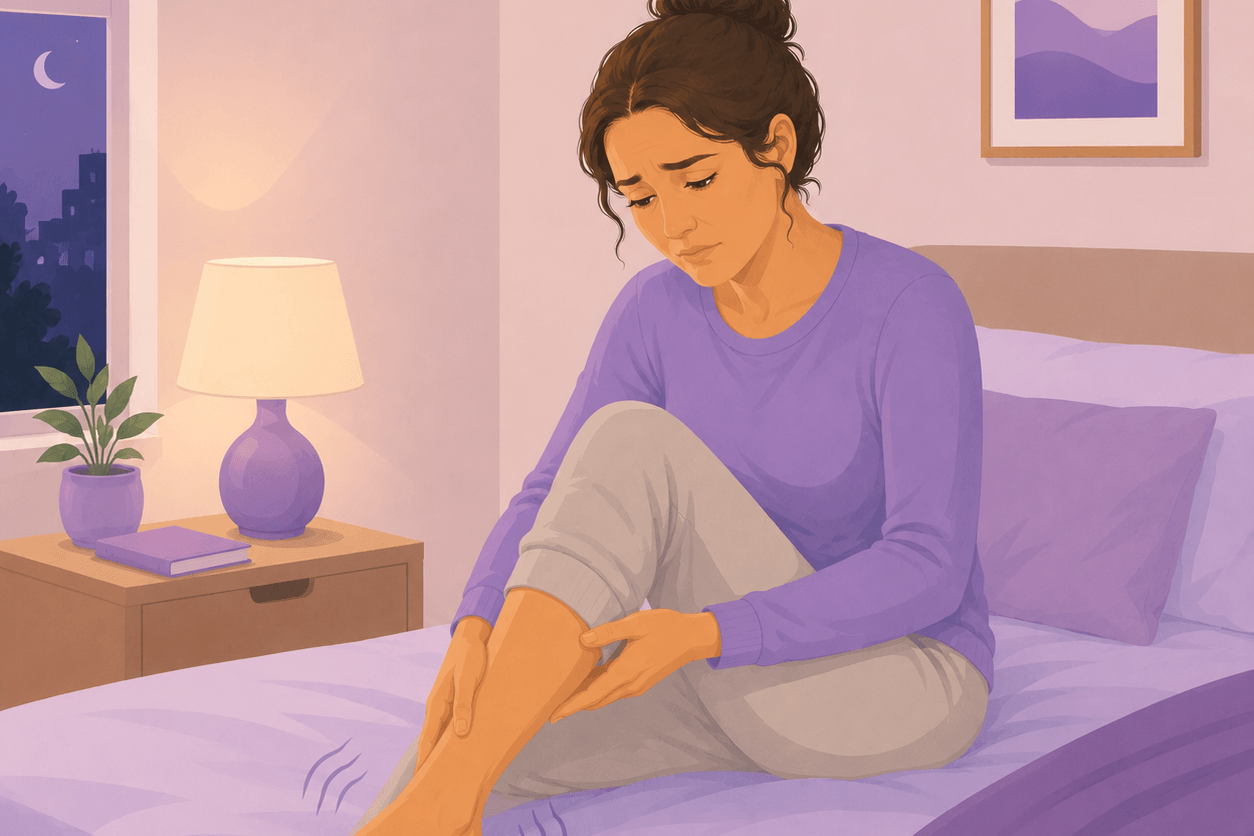
That overwhelming, irresistible urge to move your legs — often with a creepy-crawly, itching, or pulling sensation — is known as Restless Leg Syndrome (RLS). It typically hits in the evening when you’re trying to relax or sleep, making it a maddening cause of insomnia.
RLS can begin or worsen during perimenopause, and it’s linked to changes in hormones and key brain chemicals.
What’s Happening in Your Body?
While the exact cause isn’t fully known, RLS is strongly connected to two factors that shift during perimenopause: low iron levels and disruptions in dopamine pathways. Dopamine is a neurotransmitter that helps coordinate smooth muscle movement. It also helps regulate iron absorption. When iron or dopamine levels drop — or fluctuate — this system becomes unstable, leading to those uncontrollable urges to move.
Actionable Tips to Calm Your Legs:
Get Your Ferritin Checked: Ferritin is the protein that stores iron. Even if your iron levels appear normal, low ferritin (below 50 ng/mL) can trigger RLS. Ask your doctor for this specific test.
Try a Warm Bath & Massage: Soaking in a warm bath with Epsom salts (magnesium) before bed can ease muscle tension. Follow it with a gentle calf and thigh massage to further relax the nerves.
Engage Your Brain: Sometimes a mental distraction can override the physical urge.
Try This: Do a crossword, a puzzle app, or a repetitive task like knitting or coloring. It can help quiet the internal signal to move your legs.
The 'Calf Stretch' That Can Stop RLS in its Tracks
When your body’s in “fight or flight,” your nervous system can’t relax enough to sleep. This simple yoga pose helps shift you into “rest and digest” — no flexibility required.
Try This: Legs Up the Wall (Viparita Karani)
Find a Clear Wall Space. Lay down with your hips next to the wall, using a folded blanket or cushion under your lower back.
Swing and Pivot: Gently swing your legs up the wall, keeping your body in an L-shape.
Relax and Breathe: Close your eyes. Rest your arms. Take slow, deep breaths for 5–15 minutes.
This pose gently stretches tight muscles, improves circulation, and sends a strong calming signal to your brain.
The Iron-Dopamine Connection in Your Brain
RLS sits at the intersection of iron, dopamine, and movement control in your brain.
Dopamine is essential for smooth, coordinated motion — and your brain needs iron to produce it. Think of iron as the key ingredient in your brain’s “dopamine factory.” Without enough, dopamine production stalls, especially at night when levels naturally dip.
Less dopamine means the brain can’t regulate movement signals properly. That’s when the unwanted signal to move your legs takes over.
Why does RLS often appear during perimenopause?
Estrogen plays a role in both iron absorption and dopamine function. But during midlife, heavier periods can deplete iron stores, and estrogen levels start to fluctuate. Together, these shifts reduce dopamine efficiency and lower iron reserves — a perfect setup for RLS to emerge or worsen.