




Body heat & heart
That Fluttering Feeling: Understanding Heart Palpitations
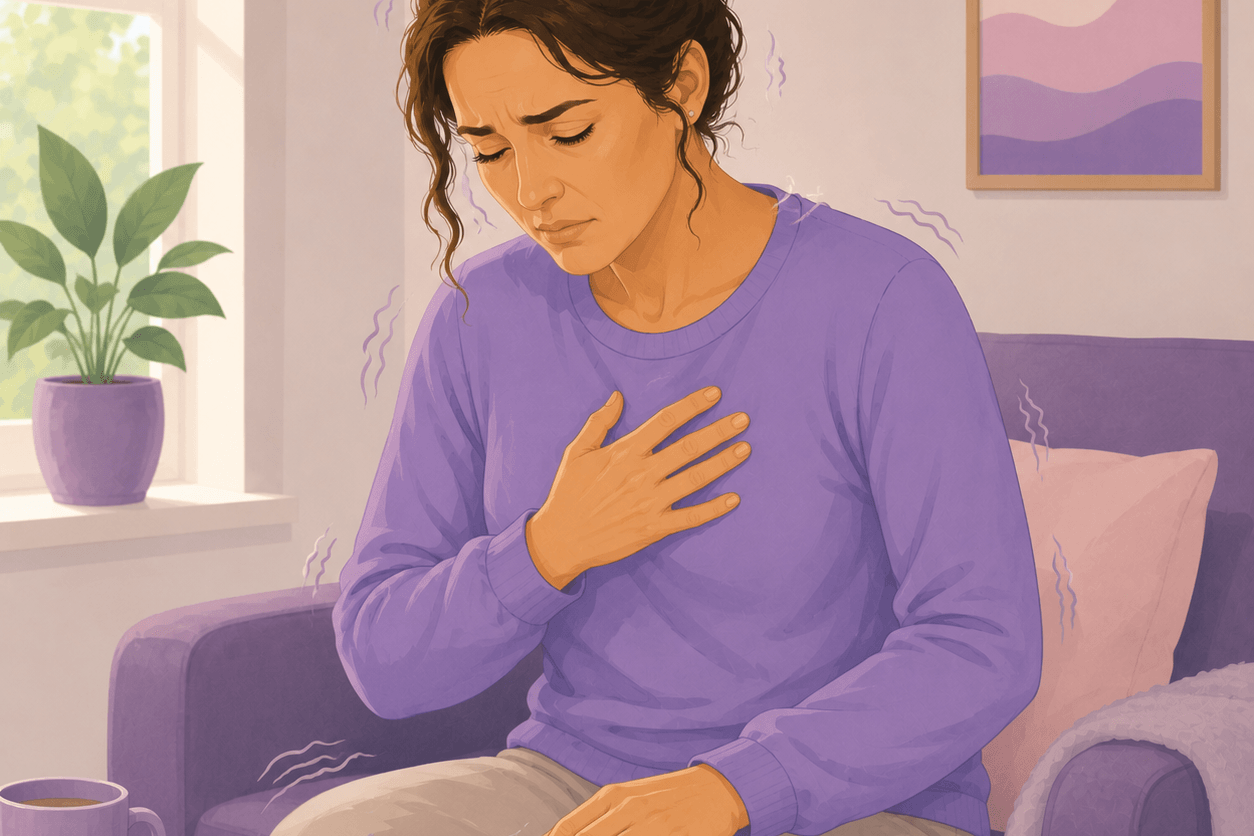
That sudden flutter. A skipped beat. A pounding in your chest. It can feel scary, but it’s often a normal part of perimenopause.
Heart palpitations are a surprisingly common symptom during this phase of life, especially as hormones shift and your nervous system becomes more sensitive.
While it’s always important to get new heart symptoms checked out by your doctor, most palpitations during perimenopause are benign — and manageable.
Actionable Tips to Find Your Calm:
What’s Happening in Your Body? Your heart’s rhythm is closely tied to your autonomic nervous system, which is influenced by estrogen and progesterone. These hormones play a role in keeping your cardiovascular system regulated.
When they fluctuate, your body may send mixed signals to the heart—causing a flutter, skip, or surge in beats. Add in stress, poor sleep, or anxiety (all common in perimenopause), and your nervous system may respond with a burst of adrenaline that feels like your heart is racing out of nowhere.
The 'Box Breathing' Technique to Stop Anxiety in its Tracks
When you feel a wave of anxiety or panic beginning, you have the power to stop it by controlling your breath. Box breathing is a technique used by Navy SEALs and elite athletes to calm the nervous system under immense pressure. It works by directly activating your “rest and digest” response.
How to do it:
- You can do this anywhere, anytime.
- Gently exhale all the air from your lungs.
- Inhale slowly through your nose for a count of 4.
- Hold your breath for a count of 4.
- Exhale slowly through your mouth for a count of 4.
- Hold your breath at the end of the exhale for a count of 4.
- That is one “box.” Repeat for 3–4 cycles. It can bring noticeable calm within minutes.
Actionable Tips to Calm a Fluttering Heart:
Check Your Electrolytes: Your heart’s electrical rhythm depends on minerals like magnesium, potassium, and calcium to stay stead.
Try This: Stay well-hydrated and eat mineral-rich foods like bananas and sweet potatoes (potassium), leafy greens and almonds (magnesium), and plain yogurt (calcium).
Manage Your Stress in the Moment: Palpitations are often triggered by stress — even if it’s subtle.
Try This: When you feel a palpitation, try the “Box Breathing” technique (inhale for 4, hold for 4, exhale for 4, hold for 4). Repeat for 1-2 minutes. This can help to calm your nervous system quickly.
Watch Your Stimulants: Caffeine and alcohol can be hidden culprits.
Try This: Pay close attention to whether your palpitations occur after your morning coffee or a glass of wine at night. Try pausing one to see how your body responds.
How the Autonomic Nervous System Gets Unbalanced
Your autonomic nervous system (ANS) has two main branches that are supposed to work in balance:
-
The Sympathetic Nervous System (SNS): The “gas pedal.” This is your “fight or flight” response. It raises heart rate, and blood pressure, and gets you ready for action.
-
The Parasympathetic Nervous System (PNS): The “brake pedal.” This is your “rest and digest” response, governed by the vagus nerve. It slows the heart rate and promotes calm and recovery.
In perimenopause, estrogen and progesterone help support this balance. But when these hormones dip or fluctuate, your body may stay in high-alert mode longer than it should.
That’s when “sympathetic dominance” can happen: your gas pedal is pressed down, but your brake isn’t working as well. This makes your body more reactive, more jumpy — and more prone to things like heart palpitations. It’s not necessarily a problem with your heart itself, but rather with the nervous system that controls it.
Understanding this can help you respond with calm, rather than fear — and use small strategies to reset your inner rhythm.
The Vagus Nerve Hack for Instant Calm
Your vagus nerve is like a calm switch for your body. It’s the main driver of your parasympathetic nervous system — the one that helps you rest, digest, and reset. Activating it can help bring your heart rate back down and calm palpitations in the moment.
Try This: The “Cold Plunge” for Your Face
-
Fill a bowl with cold water (add ice cubes if you can).
-
Hold your breath.
-
Submerge your face in the cold water for 15-30 seconds.
This activates the mammalian diving reflex, which slows your heart rate and stimulates the vagus nerve. It’s a powerful, fast-acting way to shift your body out of stress mode.
Bonus: You can also try splashing cold water on your face or using a cold compress if a full dunk isn’t practical.
This article is intended to inform and empower, not to replace personalized medical advice. If you have any concerns about your health, please speak with your doctor or a qualified healthcare provider.