




Body & weight
Suddenly Sweaty? A Guide to Perimenopause Body Odor Changes
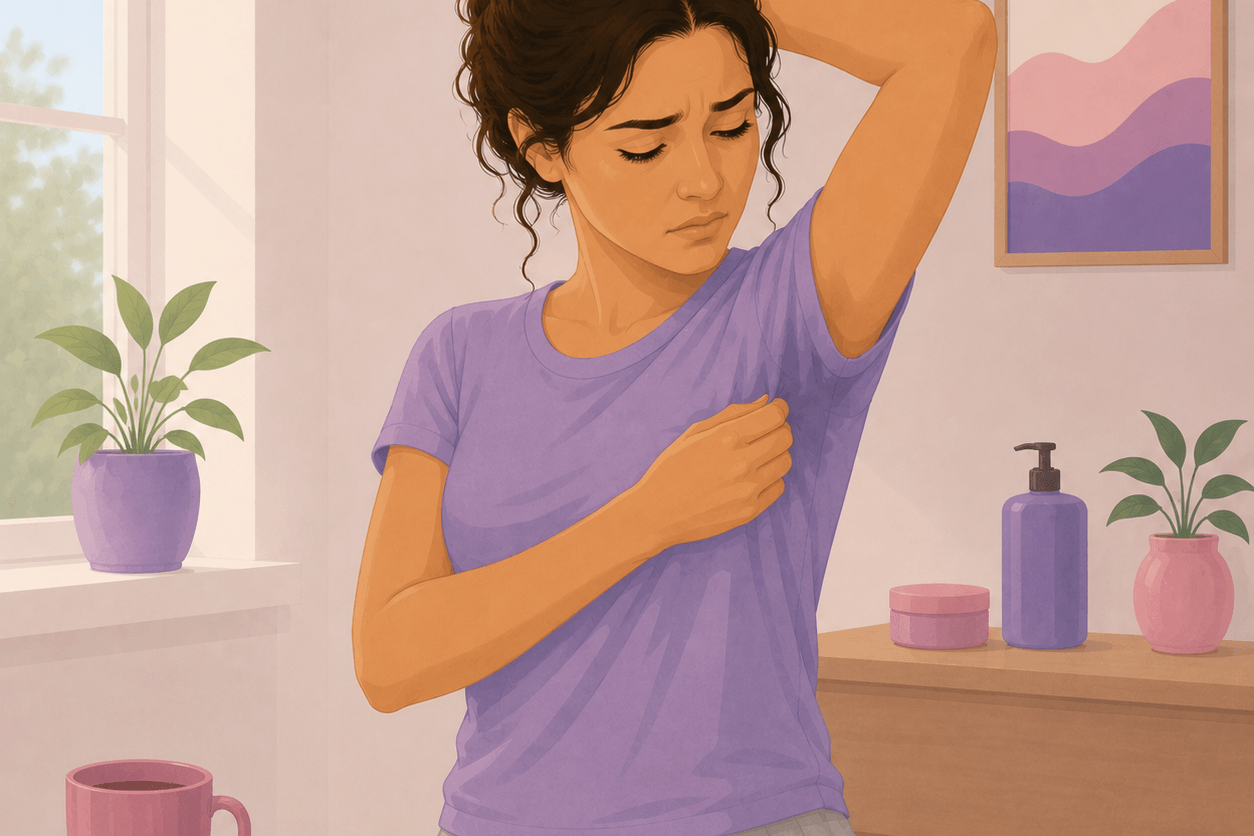
If you’ve noticed a new, stronger, or just different body odor lately, you are not imagining it. Just when you thought you had your body figured out, perimenopause rewrites the rules — again. A new, stronger, or just different body odor isn’t in your head. It’s a common (but rarely talked about) shift tied to changing hormones.
What’s Happening in Your Body?
Hormonal fluctuations, especially the interplay between estrogen and stress hormones like cortisol, can ramp up your sweat production. More importantly, it can activate a specific type of sweat gland, the apocrine gland, which produces a thicker, fat-rich sweat. When this sweat meets the normal bacteria on your skin, it can create a stronger, more noticeable scent than the watery sweat you produce when you’re simply hot.
Actionable Tips to Feel Fresher:
Boost Your Magnesium: Magnesium is a master mineral that helps with hundreds of bodily functions, including detoxification and managing your stress response. Lowering your stress can reduce “stress sweat.”
Try This: Incorporate leafy greens, nuts, seeds, and dark chocolate into your diet. An Epsom salt (magnesium sulfate) bath is another great way to absorb this calming mineral.
Choose Breathable Fabrics: Synthetic fabrics like polyester can trap sweat and bacteria, amplifying odor.
Try This: Opt for natural, breathable fabrics like cotton, linen, or bamboo for your clothing and especially your pajamas.
Hydrate, Hydrate, Hydrate: Drinking plenty of water helps to flush toxins and can dilute the concentration of your sweat, making it less potent.
Consider Chlorophyll: This is the green pigment in plants. It’s thought to act as an internal deodorizer.
Try This: Add a handful of spinach or parsley to your smoothie, or experiment with a few drops of liquid chlorophyll in water if you’re curious.
Stress Makes You Sweat (Literally). Here’s a Quick Trick to Reset
There are two main types of sweat: the watery sweat you get from being hot (from eccrine glands), and a thicker, more odorous sweat you get when you’re stressed or anxious (from apocrine glands). During perimenopause, your nervous system can be on higher alert, leading to more frequent activation of this “stress sweat.”
One of the simplest ways to manage it? A 30-second reset that calms your nervous system in real time.
Try This: The Physiological Sigh This is a technique researched at Stanford University, proven to be the fastest way to voluntarily calm your nervous system.
- Take a normal breath in through your nose.
- Then, without exhaling, take a second, shorter inhale to fully inflate your lungs.
- Then, exhale slowly and fully through your mouth.
- Repeat this just one to three times. It helps clear carbon dioxide and sends a calming signal to your heart and brain—reducing the “fight or flight” response that can trigger stress sweat.
Tip: Use it before a big meeting, in the car after a long errand, or even mid-hot flash. It’s subtle, quick, and surprisingly effective.
Apocrine Glands, Hormones, and That Body Odor Shift
There are two main types of sweat: the watery sweat you get from being hot (from eccrine glands), and a thicker, more odorous sweat you get when you’re stressed or anxious (from apocrine glands). During perimenopause, your nervous system can be on higher alert, leading to more frequent activation of this “stress sweat.”
One of the simplest ways to manage it? A 30-second reset that calms your nervous system in real time.
Try This: The Physiological Sigh This is a technique researched at Stanford University, proven to be the fastest way to voluntarily calm your nervous system.
- Take a normal breath in through your nose.
- Then, without exhaling, take a second, shorter inhale to fully inflate your lungs.
- Then, exhale slowly and fully through your mouth.
- Repeat this just one to three times. It helps clear carbon dioxide and sends a calming signal to your heart and brain—reducing the “fight or flight” response that can trigger stress sweat.
Tip: Use it before a big meeting, in the car after a long errand, or even mid-hot flash. It’s subtle, quick, and surprisingly effective.