



Body heat & heart
Your Heart in Transition: Blood Pressure & Cholesterol Changes
You’ve had healthy blood pressure and cholesterol your whole life — and now your doctor is concerned. It feels like it came out of nowhere. But this is a common change during perimenopause. As estrogen declines, the protective effect it once had on your cardiovascular system begins to fade, and your heart health may need more attention.
What’s Happening in Your Body?
Estrogen acts like a cardiovascular superhero. It keeps blood vessels open and flexible, which supports healthy blood pressure. It also helps your liver maintain a healthy balance of cholesterol — raising “good” HDL and keeping “bad” LDL in check. As estrogen drops, vessels can become stiffer, and your cholesterol numbers may shift in the wrong direction, increasing your risk for heart disease.
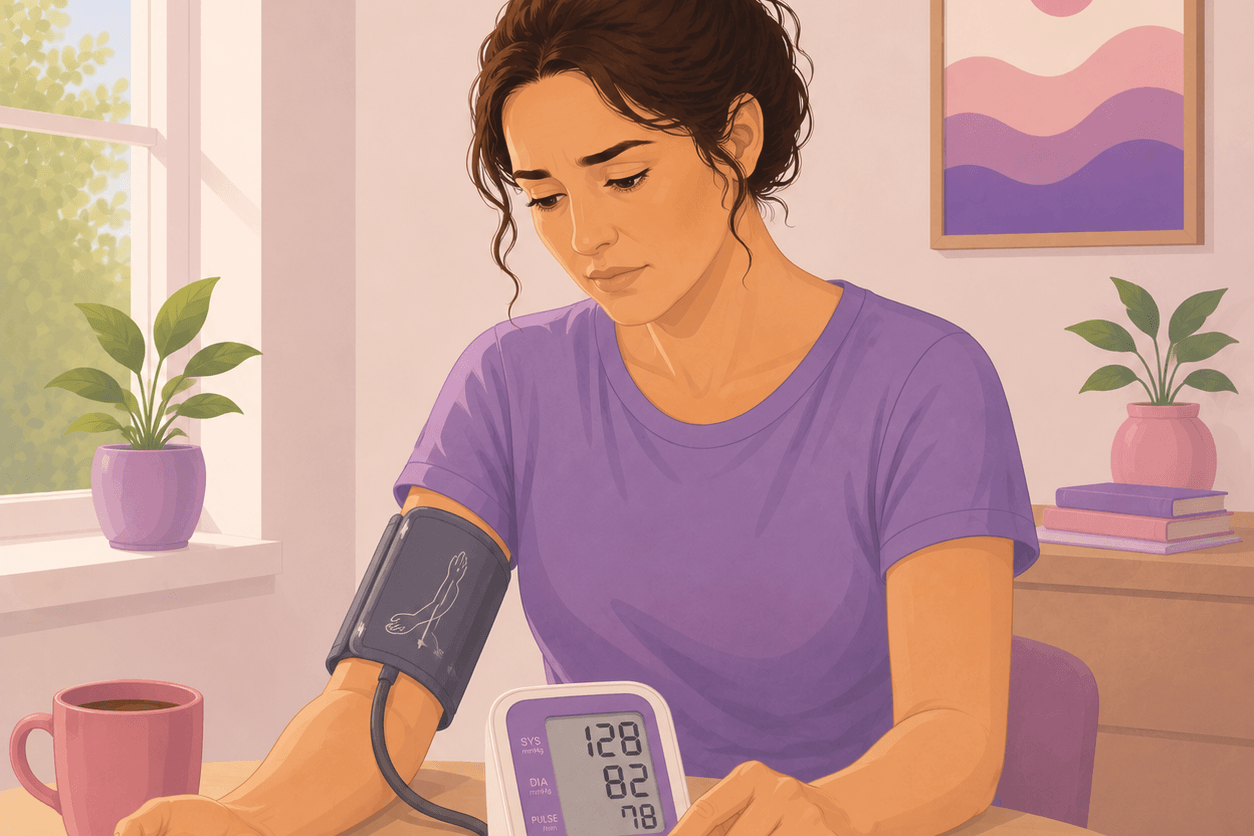
Actionable Tips for a Healthy Heart:
Try the DASH Diet: The DASH (Dietary Approaches to Stop Hypertension) plan is a heart-healthy, flexible eating pattern that can lower blood pressure.
Try This: Eat more fruits, vegetables, and whole grains. Choose lean proteins and low-fat dairy. Boost potassium-rich foods like bananas, spinach, and sweet potatoes, and cut back on sodium.
Add Soluble Fiber: Soluble fiber binds to cholesterol in your digestive system and helps remove it from your body.
Try This: Add oats, barley, apples, Brussels sprouts, and beans to your meals. Aim for 10 grams of soluble fiber daily.
Manage Stress Thoughtfully: Stress raises cortisol, which can constrict blood vessels and elevate blood pressure.
Try This: Practice stress relief daily — whether it’s deep breathing, gentle stretching, or a walk outside.
The Power of Potassium to Lower Blood Pressure
Most people think of cutting sodium to help with blood pressure. But there’s another side to the equation: boosting potassium.
Why It Works:
Potassium acts as a natural counterbalance to sodium. It helps relax blood vessels and supports the kidneys in excreting excess sodium. Together, this helps reduce water retention, lower blood volume, and ease blood pressure.
How to Get More (No Supplements Needed):
Eat potassium-rich foods throughout the day. Aim for several servings daily from:
- Leafy Greens: Spinach, Swiss chard
- Fruits: Bananas, oranges, cantaloupe, avocado
- Vegetables: Sweet potatoes, tomatoes, white potatoes (with skin)
- Other: Beans, lentils, yogurt
How Estrogen Keeps Your Blood Vessels Flexible
Your blood vessels aren’t just passive tubes — they’re active, muscular channels that expand and contract to regulate blood flow. That ability to widen is called vasodilation, and it’s key to keeping blood pressure in a healthy range.
Estrogen is a powerful vasodilator. It supports the production of nitric oxide, a molecule that tells smooth muscles in blood vessel walls to relax.
That relaxation brings two key benefits:
Lower blood pressure, since relaxed vessels provide more room for blood to flow.
Better oxygen delivery, helping tissues like your brain and heart stay nourished.
But as estrogen declines during perimenopause, nitric oxide production drops. Blood vessels can become stiffer, making it harder to regulate blood pressure. This loss of flexibility is a major reason why blood pressure tends to rise in midlife.