




Body & Weight
When Your Mouth Feels on Fire: A Guide to Burning Mouth Syndrome
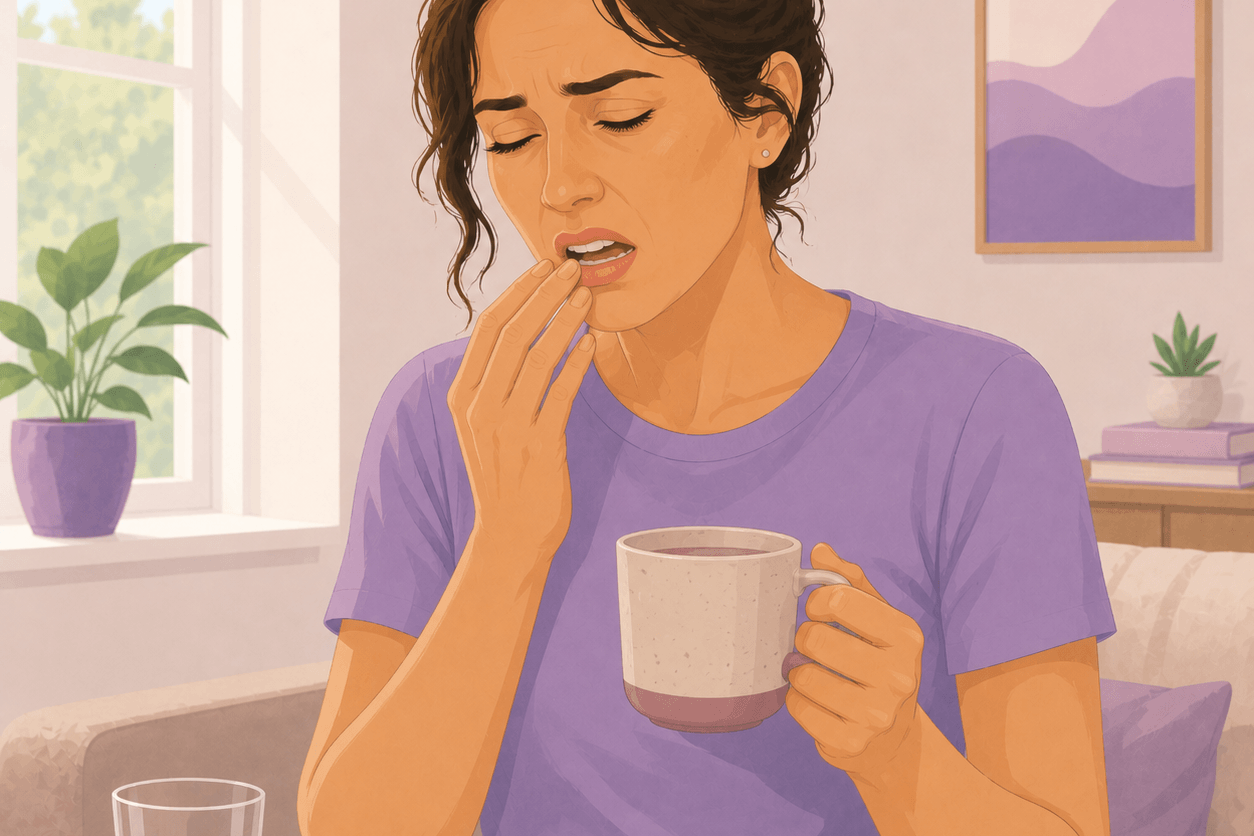
That scalded, tingling, or burning sensation on your tongue, lips, or the roof of your mouth — without any visible cause — might be Burning Mouth Syndrome (BMS). It can feel like you’ve just sipped boiling coffee, but the discomfort lingers for days, weeks, or even longer.
BMS is more common in women, especially during perimenopause and menopause.
What’s Happening in Your Body? BMS is a type of nerve-related pain (neuropathic pain). It’s believed to stem from changes in the nerves that control taste and pain in your mouth — particularly the trigeminal nerve, which sends sensory signals to the brain.
As estrogen declines, these nerves may become more vulnerable or overactive. Estrogen also plays a role in saliva production, so a drier mouth can make things worse. The result? A burning, tingling feeling that has no visible cause, but is very real.
Actionable Tips to Soothe the Burn:
Stay Hydrated and Moisten Your Mouth: A dry mouth can make the burning sensation worse.
Try This: Sip cool water throughout the day. Chew sugar-free gum or suck on sugar-free lozenges to encourage saliva flow.
Avoid Irritants: Certain things can aggravate the sensitive nerve endings in your mouth.
Try This: Pay attention to see if your symptoms worsen after consuming spicy foods, acidic foods (like tomatoes and citrus), or products with cinnamon or mint. Avoid harsh toothpastes with sodium lauryl sulfate (SLS) and alcohol-based mouthwashes.
Boost Your B Vitamins: Deficiencies in certain B vitamins (B1, B2, B6, B12) and minerals like iron and zinc have been linked to BMS.
Try This: Eat a well-balanced diet or ask your doctor about getting your nutrient levels tested.
The Cold Water Rinse for Immediate Relief
When BMS symptoms flare, a simple cold rinse can interrupt the pain signals and bring relief.
Why it Works:
Rinsing your mouth with cold water, or letting small ice chips melt on your tongue, does two things. First, the cold provides a numbing effect, much like an ice pack on a sore muscle. Second, it provides a strong, non-painful sensation that can temporarily override the faulty “burning” signals being sent by the hypersensitive nerves in your mouth.
How to do it:
- Keep a glass of ice water nearby to sip and swish.
- Let a small ice chip melt on the most painful area.
- Freeze chamomile tea into ice cubes for a soothing, anti-inflammatory rinse.
The Trigeminal Nerve and 'Phantom' Pai
- The trigeminal nerve is the main nerve responsible for sensation in your face and mouth. It’s part of a large, powerful system that sends messages to your brain about touch, pressure, and temperature.In BMS, the nerves in your mouth can become damaged or overactive. They start misfiring, sending pain signals even when there’s no real injury — a phenomenon known as neuropathic pain.Estrogen usually helps protect nerve cells. But as levels decline during perimenopause, those protective effects weaken. That can leave your mouth’s nerves more sensitive, and more likely to send faulty “burning” messages to your brain.
This is why the pain can feel very real even when there’s no redness or swelling. The nervous system itself is generating the sensation.