Anxiety & panic attacks
Mind
That Feeling of Dread: How to Soothe Perimenopausal Anxiety
That sudden wave of unease, the racing heart, the constant sense of being “on edge” — if this feels unfamiliar, it can be terrifying. But you’re not imagining it.
Anxiety during perimenopause is real, and it’s often a result of shifting hormones recalibrating your internal stress system.
What’s Happening in Your Body? Your two key hormones, estrogen and progesterone, both have profound effects on your brain chemistry.
Estrogen supports mood by helping regulate serotonin and dopamine. Progesterone is your body’s natural calming agent. When these hormone levels fluctuate or drop, it can throw off the balance in your nervous system — making it more reactive to stress and anxiety.

Actionable Tips to Find Your Calm:
Balance Your Blood Sugar: Low blood sugar can feel exactly like a panic attack: jittery, shaky, sweaty.
Try This: Try not to skip breakfast. If you feel that anxious wave creeping in between meals, have a small snack like a handful of almonds or an apple with peanut butter.
Cut Back on Stimulants: Your nervous system is already overstimulated. Caffeine can pour gasoline on the fire.
Try This: Notice how you feel after your morning coffee. If you’re edgy or wired, consider switching to half-caf or swapping your second cup for calming herbal tea.
Get It Out of Your Head Your Worries: Anxiety loves to spiral when it stays in your head.
Try This: Journal for 5 minutes, talk to a friend, or do a quick “brain dump” to release looping worries.
The 'Box Breathing' Technique to Stop Anxiety in its Tracks
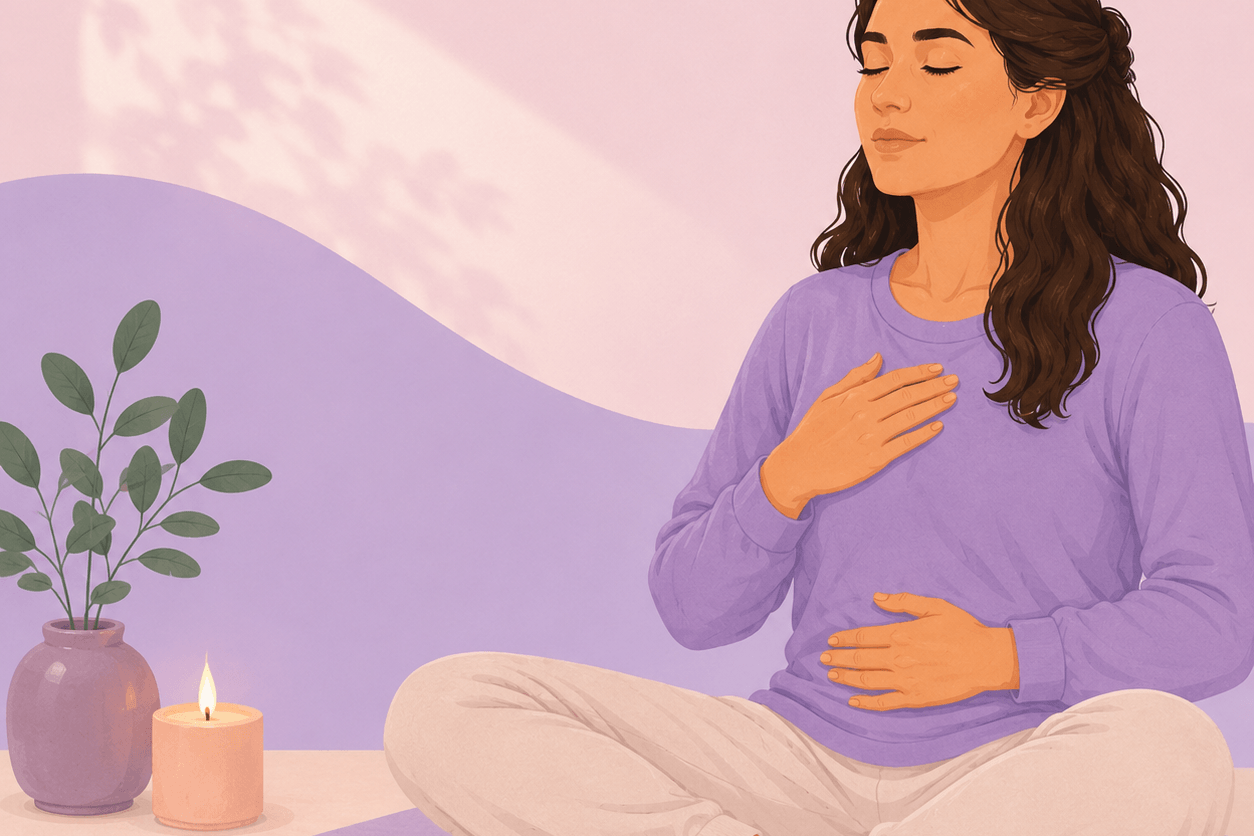
When you feel a wave of anxiety or panic beginning, you have the power to stop it by controlling your breath. Box breathing is a technique used by Navy SEALs and elite athletes to calm the nervous system under immense pressure. It works by directly activating your “rest and digest” response.
How to do it:
- You can do this anywhere, anytime.
- Gently exhale all the air from your lungs.
- Inhale slowly through your nose for a count of 4.
- Hold your breath for a count of 4.
- Exhale slowly through your mouth for a count of 4.
- Hold your breath at the end of the exhale for a count of 4.
- That is one “box.” Repeat for 3–4 cycles. It can bring noticeable calm within minutes.

When Progesterone Drops: The Science Behind Your Anxiety
Let’s talk about progesterone — often overlooked, but key to why anxiety can suddenly feel worse during perimenopause.
Progesterone breaks down into a powerful brain-calming compound called allopregnanolone, which works by activating GABA receptors (the same ones many anti-anxiety medications target). GABA tells your nervous system: “You’re safe.”
When progesterone drops, your brain gets less of that calming message. It’s like the brakes are off.
Here’s what that means:
- Your stress hormones (like cortisol and adrenaline) get louder.
- Your brain can become more sensitive to everyday stressors.
- You may feel like you’re “stuck in on mode” — anxious, wired, and unable to relax.
- This isn’t a personality flaw. It’s a brain-body response to a shifting hormonal landscape.
This article is intended to inform and empower, not to replace personalized medical advice. If you have any concerns about your health, please speak with your doctor or a qualified healthcare provider.