




Mind
The Perimenopausal Rage: It's Not You. It's Your Brain on Hormones
It’s more than just irritability. It’s a sudden, white-hot, disproportionate anger that can seem to come from nowhere. If you’ve ever surprised yourself, or someone else, with a reaction that felt way too intense, you’re not alone. This “rage” isn’t just emotional. It’s hormonal.
You’re not broken. You’re not a bad person. Your brain is simply in a heightened state of alert.
What’s Happening in Your Body? Your brain’s emotional regulation center — especially the amygdala and prefrontal cortex — is highly sensitive to estrogen. Estrogen helps regulate mood by supporting serotonin and calming signals. When estrogen levels drop or fluctuate:
- Your amygdala (your brain’s “smoke detector”) becomes more reactive
- Your prefrontal cortex (your brain’s “wise CEO”) loses some of its calm, rational control
- Add in disrupted sleep, blood sugar swings, and other stressors, and the emotional fuse gets shorter. Rage becomes easier to trigger — and harder to control
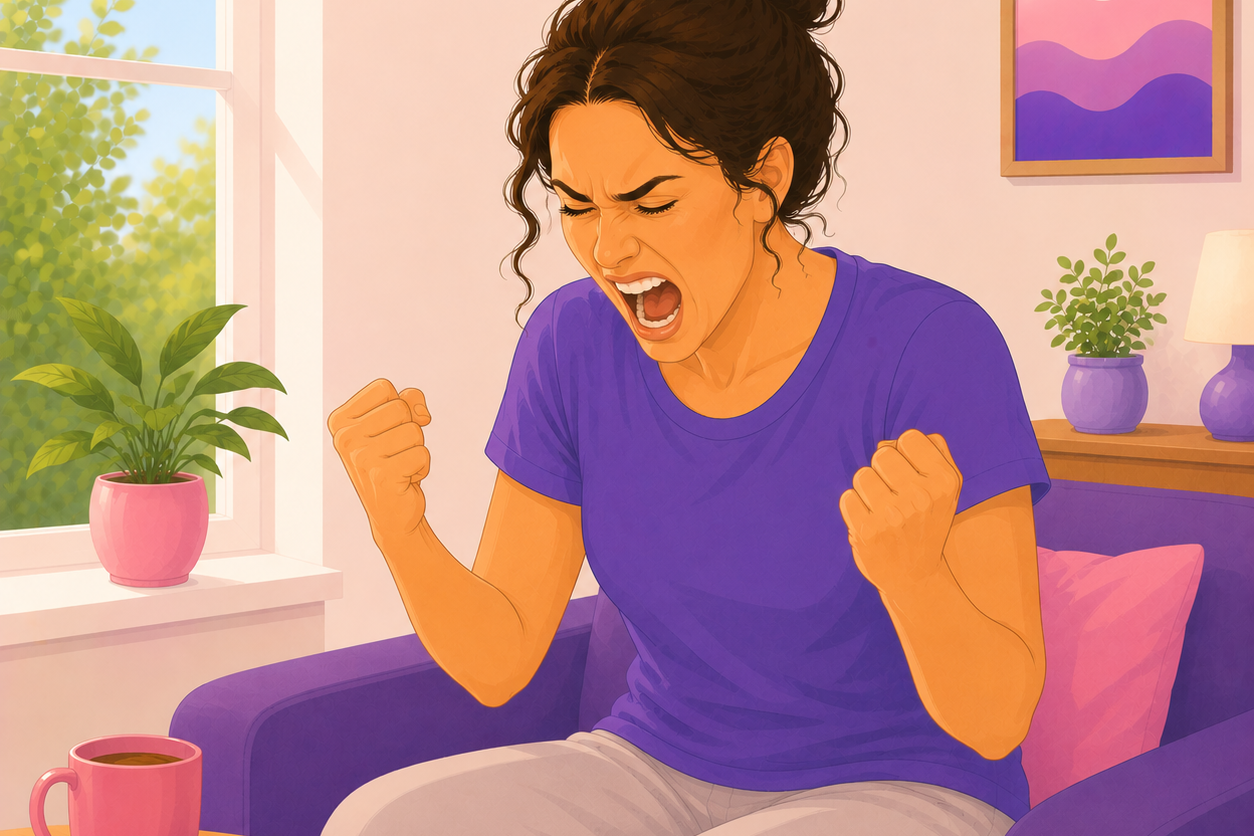
Actionable Tips to Tame the Rage:
Recognize Your Early Warning Signs: Rage doesn’t usually go from 0 to 100 instantly. There are often physical precursors.
Try This: Notice what your body feels like right before an outburst. A flushed face? Tight jaw? Surge of heat in your chest? Identifying these signs gives you the power to pause..
Create a “Rage Escape Plan”: You cannot think your way out of rage. You must physically remove yourself from the trigger.
Try This: In a calm moment, create a go-to line like: “I need 5 minutes. I’ll be back.” Then step away, whether it’s a walk, a locked bathroom, or turning on loud music to reset.
Stabilize Your Blood Sugar: A drop in blood sugar can mimic the stress response, making your fuse even shorter.
Try This: Never skip meals. Ensure every meal has protein. If you feel yourself building up, ask, “When was the last time I ate?” A quick snack with protein and healthy fat can help stabilize your mood.
The 'Rage Reset': A 60-Second Physical Intervention
When you feel a surge of rage, you are in a full-blown “fight or flight” state. Your body is flooded with adrenaline. To reset, you need a physical release that can rapidly calm this storm. This intense, short burst of activity can discharge the adrenaline.
Try This: The Power Squeeze and Release
Find a space where you can be alone for 60 seconds (a bathroom, a closet, your car).
Squeeze: For 10 seconds, clench every single muscle in your body as tightly as you possibly can. Clench your fists, squeeze your arms into your body, tighten your abs, clench your glutes and thighs, curl your toes. Make yourself into a tight, tense ball of energy.
Release & Sigh: After 10 seconds, let everything go with a huge, audible sigh or groan. Feel the tension flood out of your body as you go completely limp.
Breathe: Take 3 slow, deep breaths, focusing on a long, slow exhale.
Repeat the squeeze/release/breathe cycle one more time if needed.
Why it works: This progressive muscle relaxation technique offers a physical outlet to discharge adrenaline and helps your nervous system begin to calm.
Amygdala Hijack: The Science of 'Flipping Your Lid
Perimenopausal rage often feels like a switch has been flipped. That’s not just a metaphor — it’s actually a well-documented brain response called an amygdala hijack.
Your Brain’s Key Players:
The Amygdala (Smoke Detector): Scans for threats and sounds the alarm. When estrogen drops, the amygdala becomes hyper-sensitive, overreacting to even minor stressors.
The Prefrontal Cortex (CEO): Responsible for logic, reflection, and thoughtful response. When you’re calm, it says, “Let’s think this through.” But during hormonal shifts, its influence weakens.
When stress, low estrogen, and disrupted sleep collide, the “smoke detector” overrides the “CEO.” Your brain is flooded with cortisol before the rational part can respond. That’s why your reaction feels so intense, immediate, and sometimes out of character.
Understanding this doesn’t excuse rage — but it explains it. And that can be the first step in regaining control.