




Mind
Is Every Twinge a Tumor? A Guide to Health Anxiety
Change the color to match your brand or vision, add your logo, choose the perfect layout, modify menu settings, add animations, add shape dividers, increase engagement with call to action and more.
Is Every Twinge a Tumor? A Guide to Health Anxiety
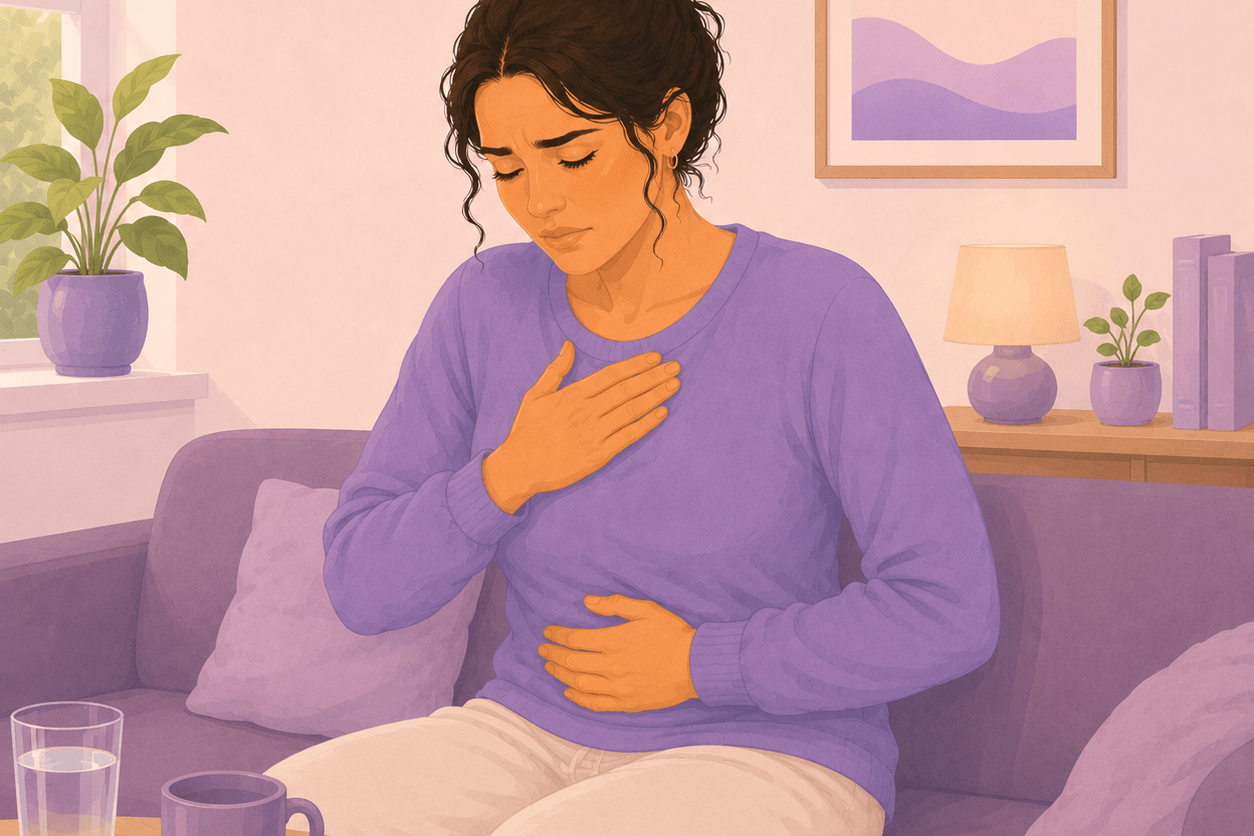
Health anxiety often intensifies during perimenopause. It’s a real, physiological response to a perfect storm of shifting hormones and unfamiliar body sensations. Your brain’s internal “threat detector” is on high alert, and it can misinterpret these changes as danger.
What’s Happening in Your Body (and Mind)? Perimenopause increases the likelihood of health anxiety for three reasons:
- You’re experiencing new symptoms like heart palpitations, dizziness, or tingling — often for the first time.
- Your nervous system is on edge. Hormonal shifts lower your stress threshold and raise internal sensitivity.
- Your brain is pattern-seeking. It latches onto new physical sensations and jumps to worst-case conclusions.
Together, this can create a loop of fear and hypervigilance that’s hard to break — but very possible to manage.
The 'Fact vs. Feeling' Reality Check Exercise
Health anxiety is driven by feelings that feel like facts: “My heart is racing — I must be dying.” This simple tool helps reframe those feelings through the lens of truth.
Try This When You’re Spiraling:
- Draw a line down a piece of paper.
- On the left, write “Anxious Feelings.”
e.g., “This headache is probably a brain tumor.” - On the right, write “Objective Facts.”
e.g., - “I have a headache.”
- “My doctor told me hormonal headaches are common in perimenopause.”
- “I didn’t sleep well last night, which often gives me a headache.”
- “I have had hundreds of headaches in my life, and none of them have been a tumor.”
- “I am still able to walk, talk, and think clearly.”
- This side-by-side visual helps your brain engage its rational centers and interrupt the emotional loop that’s feeding your anxiety.
The 'Self-Compassion Break' Exercise
Self-criticism is one of the fastest ways to erode self-worth. This simple, science-backed practice from Dr. Kristin Neff can help you shift from self-judgment to self-kindness in just a few minutes.
Interoception: The Science of Your Body's Internal Awareness
Interoception is your brain’s sixth sense: it interprets your body’s internal signals — like heart rate, temperature, or digestion. When you feel anxious about symptoms, interoception is likely involved.
In perimenopause, your interoceptive system can become hyper-vigilant.
Small changes — a skipped heartbeat, a twinge in your chest, or a new buzzing sensation — get interpreted as danger.
Here’s why:
- Estrogen and progesterone help regulate the nervous system.
- As they drop, your body’s “internal volume” gets turned up.
- Your brain may overreact to mild sensations it once ignored.
- You’re not imagining your symptoms.
Your body is sending signals — but your brain is interpreting them through a fear-based lens. The goal isn’t to stop feeling your body but to retrain your brain to interpret these signals with less fear and more accuracy.